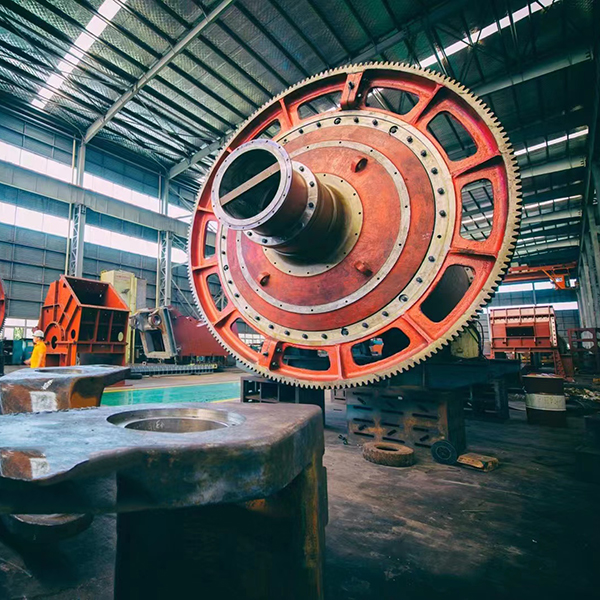
Why is the Apron Feeder a "Major Force" in Material Handling? Exploring the Core Technology of Heavy-Duty Conveying
An Analysis of the Irreplaceability of Tank Chain Structure, Impact-Resistant Design and Variable Frequency Control in Mine Primary Crushing Operations
In industries such as mining, metallurgy and building materials, the "first kilometer" at the front end of the production line is always the toughest nut to crack. Massive blasted rock blocks, tens of tons of silo pressure, and continuous heavy-duty impact—in such working conditions, the apron feeder (commonly known as the plate feeder) has always occupied an unshakable dominant position and is hailed as a "major force" in the field of material handling. Where exactly does this strength come from? This article will delve into its technical core.
Source of Strength: Derived from Tank-Grade Chain Transmission
The reason why the apron feeder can become the core of heavy-duty conveying lies in its adoption of tank chain technology transplanted from military tracked vehicles.
Different from the "frictional flexible connection" of belt conveyors, the apron feeder adopts a "rigid meshing" between sprockets and chains. This meshing transmission has an inherent anti-slip characteristic. When meeting the requirements of high torque and low speed, the huge torque output by the motor is amplified by the reducer and directly acts on the sprockets, driving the chain plates made of high-strength alloy steel (such as 16Mn and NM400) to move.
The advantages of this structure are as follows:
Absolute rigidity and impact resistance: The chain is composed of precision cast chain links, and the cooperation between pin shafts and sleeves can withstand the instantaneous huge impact force generated when ore falls, which is unattainable by any rubber product.
Withstanding enormous silo pressure: Under the silo, the gravity of materials is directly applied to the chain plates. The numerous supporting rollers and idlers on the frame of the apron feeder evenly distribute the pressure to the foundation, ensuring a firm and stable structure without deformation.
Precise Control: From "Extensive Feeding" to "Intelligent Feeding"
Modern apron feeders are no longer just bulky and rugged conveying equipment. By integrating variable frequency speed regulation technology, they have become the "metronome" of intelligent production lines.
Operators can adjust the running speed of the apron feeder in real time according to the load of the subsequent crusher. The apron feeder will automatically decelerate when the crusher is fully loaded and accelerate when the material level is too high. This characteristic of precise controllability of feeding capacity avoids blockage or idling, and can increase the overall line output by more than 10% at maximum. Meanwhile, due to the low-speed and high-torque operation mode, the energy consumption ratio of the equipment is much lower than that of high-speed equipment, which conforms to the development requirements of green mines.
Conclusion
The apron feeder can become the mainstay in the field of material handling because it perfectly solves the most difficult "initial link" in industrial material handling. It withstands pressure with its tough "mechanical skeleton" and conveys materials with stable "steps", locking in high-efficiency production capacity from the source. For mine investors pursuing long-term and stable returns, choosing a high-quality heavy-duty apron feeder is to lay the solidest foundation for the entire production line.
[Sinoma--Liyang ] Specializes in the R&D and production of intelligent feeding systems. Our technical team can provide free technical solutions from apron feeder selection to the optimization of the whole process flow according to your material characteristics and site layout, helping you reduce costs, improve efficiency and enhance core competitiveness.
